Nairobi Charter on Transformative Education Financing
 TaxEd Alliance
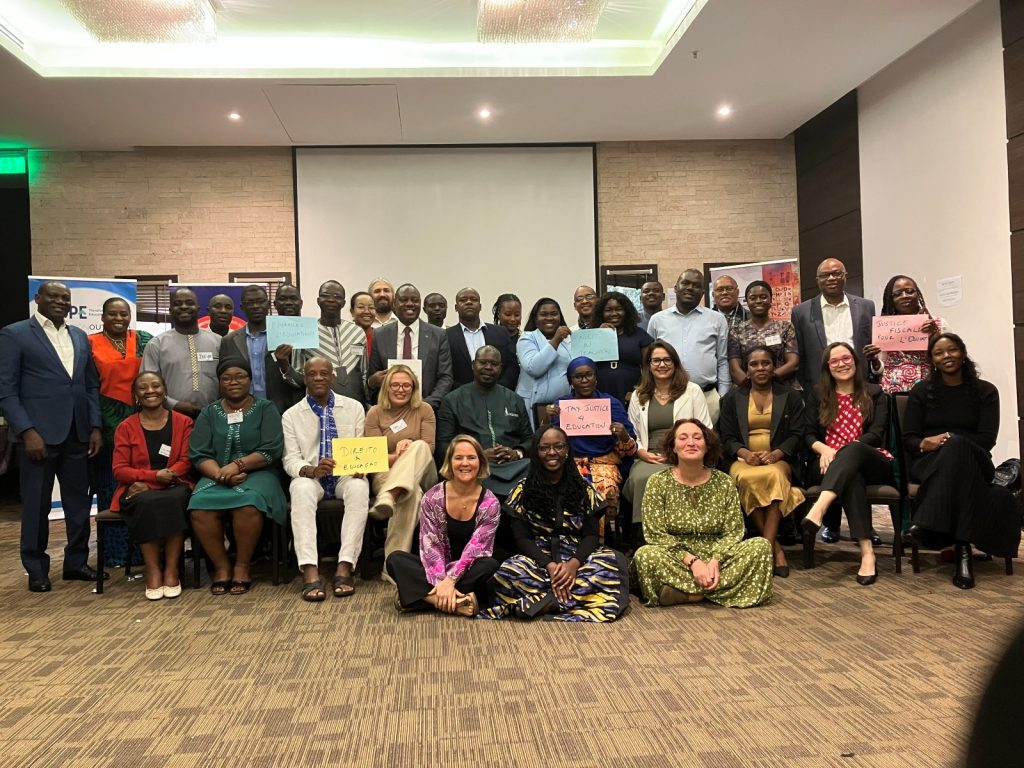
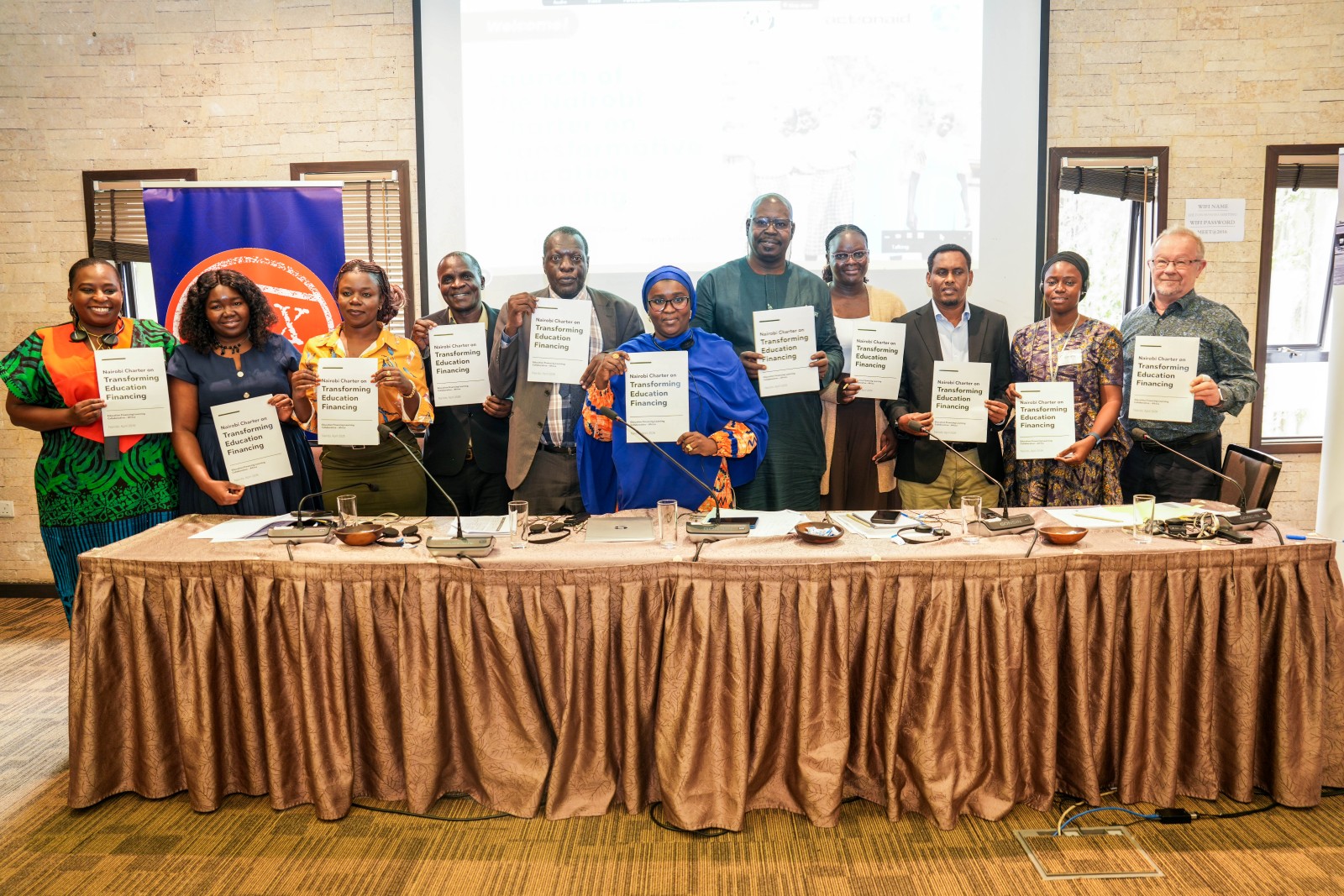
On 24th April 2026, civil society organisations (CSOs) from across Africa launched the Nairobi Charter on Transformative Education Financing. The Charter is a collective call to governments and global partners to urgently strengthen investment in equitable and quality public education systems.
The Charter was launched during an advocacy event held as part of Global Action Week for Education (GAWE) at the DoubleTree by Hilton Hotel, Nairobi, bringing together government representatives, development partners, regional civil society organisations, national teacher unions and media. The Charter was presented to the Ministry of Education, Kenya Revenue Authority and Global Partnership for Education.
At a time when education systems across sub-Saharan Africa are under increasing strain due to rising debt burdens, shrinking fiscal space, protracted crises and competing public spending priorities, the Nairobi Charter highlights the urgent need for bold and sustained financing reforms.
The Charter is the culmination of the Education Financing Learning Collaborative, an initiative that brought together CSOs and National Education Coalitions from across Africa. The learning collaborative is coordinated by ActionAid and the Tax Ed Alliance, with support from Education Out Loud (EOL), a programme funded by the Global Partnership for Education.
Through peer learning, research, and advocacy, participating organisations developed shared priorities to address systemic challenges in education financing. These include actions to increase the size, share, sensitivity, and scrutiny of education budgets, and to advance evidence-based approaches based on systematic measures to calculate the Cost of Quality Education per Student across different countries, as pioneered in Brazil.
As expressed in the Nairobi Charter, the solution to the education funding crisis lies in domestic resource mobilization which requires both national and global action, in particular on tax and debt justice. For example, the Charter calls on governments to:
- Increase spending on education – to address teacher shortages, to ensure sufficient funds for infrastructure and other development costs and to improve equity across public education systems. Ensure at least 20% of total national budgets (before debt servicing) are spent on education. Increased investment must also translate into adequate financing for every learner , ensuring that quality education is delivered in reality. In many cases, this will require going far beyond current benchmarks, as existing spending levels are often insufficient to meet the true cost of providing inclusive, equitable, and quality education.
- Set ambitious targets to increase tax-to-GDP ratios by five percentage points by 2030 – which would enable all countries to double their spending on education (and significantly increase spending on other public services).
- Ensure these bold increases in tax revenues are achieved through progressive taxation – we need to shift the burden away from regressive consumption taxes toward corporate and individual wealth taxation. It is time to end harmful tax incentives and exemptions for corporates – and to avoid any tax increases that add to the already excessive burden falling on those living in poverty or struggling on low incomes.
- Demand urgent action for debt cancellation and restructuring – recognising that debt is now a major obstacle to increasing spending on education across Africa. Debt crises are deepening owing mostly to global forces (such as rising interest rates owing to war and other crises) and need a collective response across Africa. It is because of debt that African countries are under coercive pressure to pursue austerity policies imposed by the IMF, including holding down spending on the public sector wage bill which affects teachers more than anyone else.
- Enhance Equity and Transparency – strengthen budget scrutiny mechanisms to allow citizens to hold governments accountable for education spending and to ensure public money reaches the most excluded communities.
We need global action to complement national action, including finalising and adopting a strong UN Framework Convention on International Tax Cooperation in 2027, and starting negotiations for a UN Framework Convention on Sovereign Debt.
It is no coincidence that this Charter was launched in Nairobi. Kenya’s leadership in global education financing has been important, including through launching the Heads of State declaration on education financing in 2021. But this momentum needs to be sustained.
The civil society organizations and education coalitions involved in the Education Financing Learning Collaborative commit to hold the flame high for education financing both nationally and globally. We will continue to advocate to ensure that no child is left behind due to fiscal injustice.
Supporting organisations
| ActionAid |
| Adda Girls Education Foundation |
| Association des Personnes Rénovatrices des Technologies Traditionnelles (APRETECTRA), Benin |
| Campanha Nacional pelo Direito à Educação, Brazil |
| Coalition National pour l’Education pour Tous du Burkina Faso (CN-EPT/BF), Burkina Faso |
| Coalition des Organisations en SYnergie pour la Défense de l’Education Publique (COSYDEP), Senegal |
| Civil Society Budget Advocacy Group (CSBAG), Uganda |
| Organisation pour le Développement Durable, le Renforcement et l’Autopromotion des Structures Communautaire (DEDRAS), Benin |
| Education Coalition of Zimbabwe (ECOZI) |
| Elimu Yetu Coalition (EYC) Kenya |
| Global Campaign for Education |
| La Coalition Éducative Tunisienne (CET) |
| Movimento de Educação Para Todos (MEPT), Mozambique |
| Rede Nacional da Campanha de de Educação para Todos – Cabo Verde (RNCEPT-CV), Cape Verde |
| School for Life, Ghana |
| Swaziland National Coalition on Education for All (SWANCEFA) |
| Zambia National Education Coalition (ZANEC) |