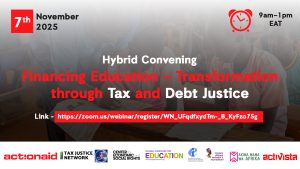
Zambia has made progress in expanding access to education, most notably the introduction of free education for early childhood through to secondary education in all public schools.
However, urgent action is needed to tackle persisting inequalities that prevent many children from completing a full cycle of quality, equitable public education. A key priority is to continue scaling up a well-supported, qualified teaching workforce, and invest in an equitable, quality public education system.
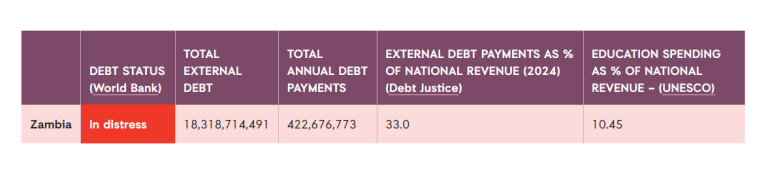
Investing in education in Zambia is becoming increasingly difficult amid rising debt servicing costs. In 2024, external and domestic debt servicing consumed a shocking 123% of government revenue, 90% of total government expenditure, and 26% of GDP—nearly six times the education budget.
To effectively increase in public investment in education in Ghana, the TaxEd Alliance’s 4S approach provides guidance:
Share – Allocate a larger share of the budget to education
Size – Expand overall revenues through fair taxation and debt justice
Sensitivity – Target spending to reach the most marginalised
Scrutiny – Strengthen transparency and accountability so that funds reach schools
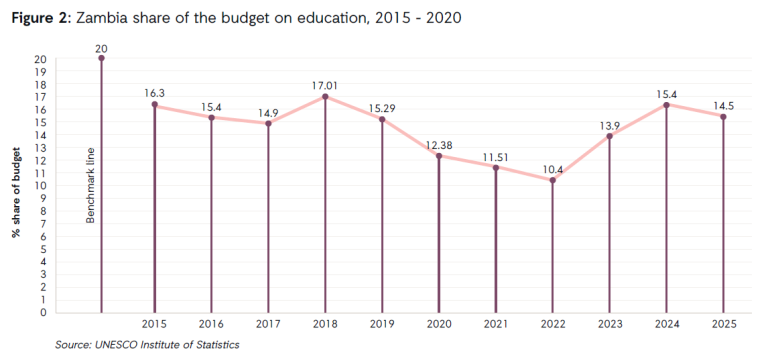
In particular, Zambia must urgently increase the share of the budget allocated towards education to at least 20% and leverage progressive, gender-responsive, and climate-sensitive tax policy reforms to increase its tax-to-GDP ratio in order to expand its public spending capacity to meet the costs of SDG 4..
See the key statistics below and read the full briefing here.